
Thanks to my phone service crapping out, I found myself speed walking in circles through the narrow, cobblestone streets of Venice’s San Marco neighborhood. Desperately hoping to make it to one of the two nightly seatings at Ai Mercanti, a Michelin-recommended restaurant with a focus on seasonal, locally sourced ingredients, I doubled back down a street, past a haberdashery and tourists looking for neon sugar cream they would call “gelato” (though the pros know real gelato is muted in color and stored in covered metal tubs).
Maps told me I had already arrived, but the restaurant was nowhere in sight. This is a common trick the phone service likes to play in Venice– its narrow alleyways and compact buildings send tech voodoo up in the air, rendering phones almost useless for me and the millions of other tourists that visit the collection of over 100 islands that make up The Floating City.
I looked up to search for street names, and if I blinked again, I would have missed the almost invisible, narrow pathway winding through two ancient buildings that opened to a small courtyard and finally my dinner location.
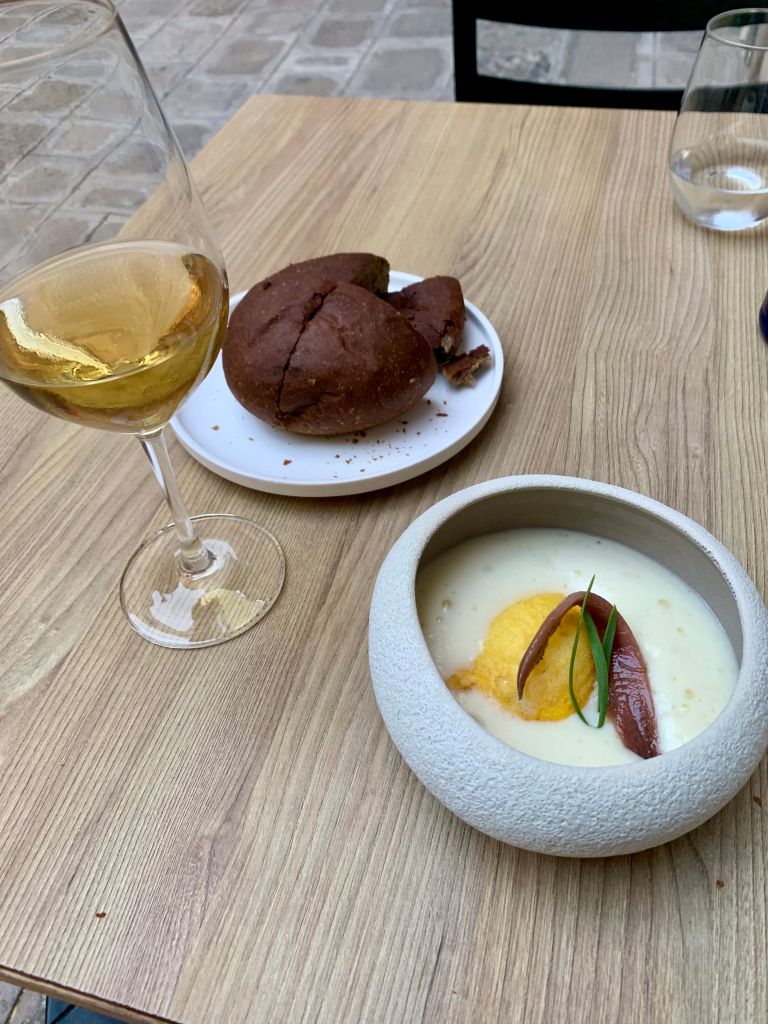
The waitstaff brushed off my untimeliness and I graciously dug into a bite of “apparently” crispy egg, potato foam, and canterbury anchovies. This starter was joyously well balanced – the savoriness of the egg was enriched by the depth of that creamy potato foam, and the anchovy rounded out the dish with a deliciously salty, umami blast.
I kinda felt guilty for lounging in at my terrace-facing table stuffing my face with spinach and ricotta pasta, and moscato while I watched group after group of hungry patrons inquire for availability. “If we have a cancellation, our next availability is 9:30,” the waiters repeated to no less than 15 hopeful-diners. Whoever would cancel their reservation here is crazy. Being late because your maps don’t work, that’s –*ahem* a different story.
As people continued to ask for availability, I wanted to shout to the world that the passion fruit sorbet was an explosion of fresh flavor but my mouth and face twisted with every delicious, sour spoonful, leaving me in a dream-like state at my table for one, stuffed and slightly buzzed from the sweet, Italian moscato. Plus the hopeful patrons probably would have scowled and possibly thrown me into the nearest canal for bragging.

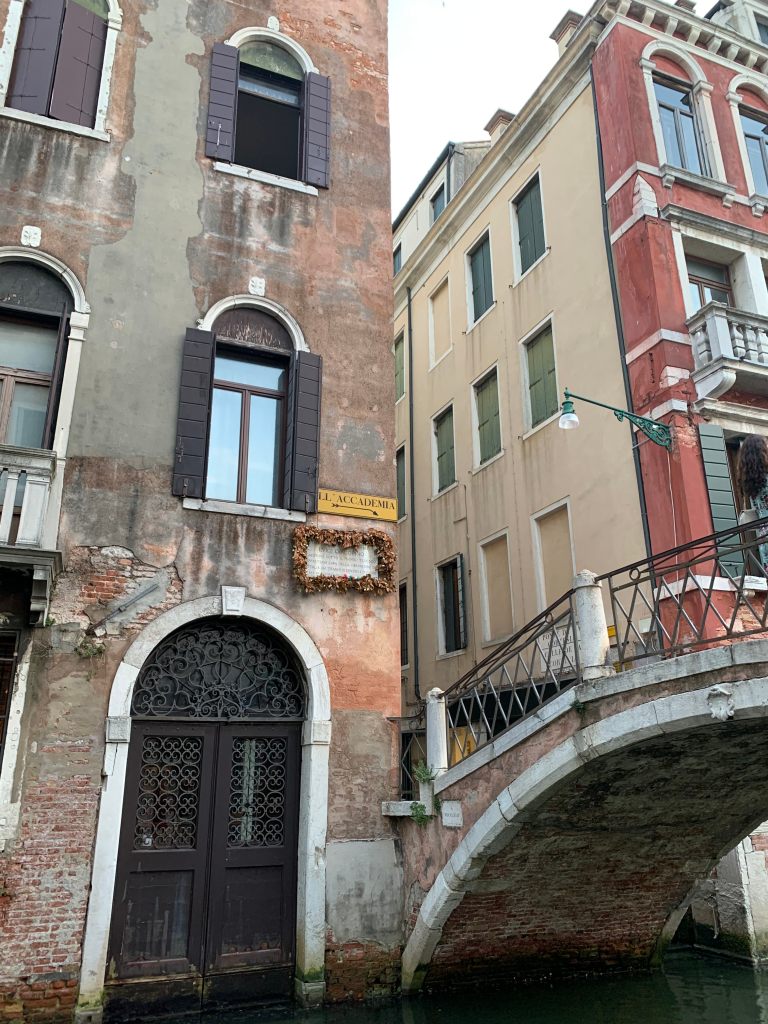

Venice is not “known” for its food. It’s not known for its local culture. It’s not known for the magic and beauty of its alleyways, under the radar museums, its neighborhoods, or its artisan shops. Venice is known for its tourists. Or perhaps I should say it’s known for its overtourism.
The struggles of Venice’s over tourism were a topic of intense research for me prior to this trip. I’ve wanted to go to Venice forever — and apparently, so has everyone else. Today, there are more tourists here than residents. In fact, it’s a harsh reality for the city, which has been trying (and often failing) to solve its over tourism crisis for decades. From cruise ships to day-trippers, the sheer volume of visitors puts enormous strain on the fragile city — and yet, its beauty still calls us in.
I saw over and over in my research for this trip “It’s easy to have a bad meal in Venice,” including warnings about any restaurant advertising to tourists, menus targeting English speakers, and of course the warning signs for fake gelato.

Due to over tourism and skyrocketing real estate prices, Venice’s local population has been steadily pushed out, leading to the erosion of its authentic culture—and with it, much of its magic. Before arriving, I couldn’t help but wonder: is Venice just another hollow tourist destination, like Las Vegas or Dubai? A place built around the idea of a city, but lacking a soul—devoid of real locals who give a place its true character and cultural depth?
I was pleasantly surprised.
The narrow, pedestrian-only alleyways of Venice are a relic of its nautical past. This unique city is spread across 118 tiny islands, created by settlers who fled invasions on the mainland around the 5th century. The result today is a maze of winding, confusing, but utterly delightful alleyways, begging you to wander off the main tourist trail — especially the crowded path between the Rialto Bridge and Piazza San Marco. Getting lost in Venice isn’t just inevitable; it’s part of the magic.
Here are some of my favorite moments from “real” Venice:
- Enjoying a locally-made fruit tart with Milo, the Maine Coon who sat and watched me in a hidden alleyway in the Dorsoduro neighborhood
- Wandering the winding streets from San Marco to St. Mark’s Square at night with a gelato in hand. As my cousin Hunter said “the city is beautiful during the day, but Venice comes alive at night.”
- Discovering a sleepier side of Venice in the grassy islands of Burano and Torcello.

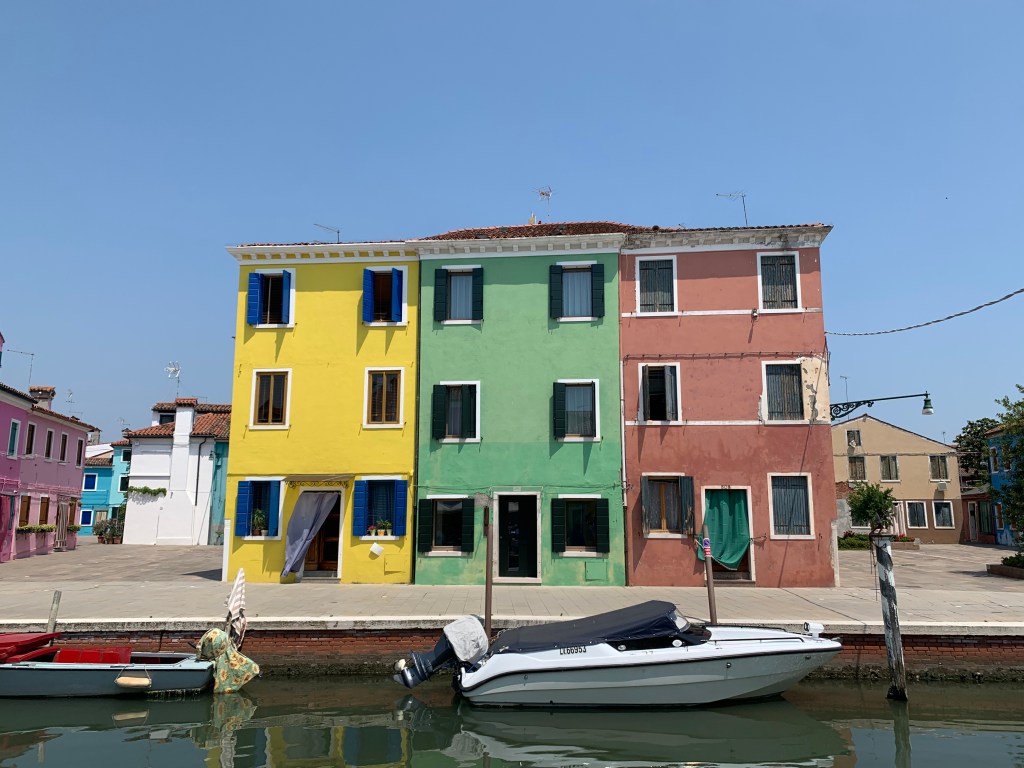
The “real” Venice is not found in mountains of neon “gelato”, fake murano glass shops, a commercialized gondola, or Burger King (seriously people…. Burger King?!).
When my phone service cut out that night, forcing me to look up and pay attention to what was around me, this was a valuable lesson in how to experience this magical city. Venice reveals itself in whispers—down quiet alleys, in unexpected reflections, and through the echo of footsteps on stone—if only we’re present enough to notice. Put the phone away. The real magic isn’t on your list; it’s waiting to be discovered.
For those weary of visiting Venice because of its overtourism, or because you once stopped in the city for 4 hours on a cruise excursion, I direct you to the ironic quip of Yogi Berra “ Nobody ever goes there anymore – It’s too crowded.”
Go to Venice, but discover it’s magic through the lens of a local.

 Traveling With Lola
Leave a comment