
Mystical Mystic Connecticut
Because of my mom’s strong encouragement, I found myself in Mystic, Connecticut while visiting my friend and college classmate, Skyler, who just moved to Providence, Rhode Island for graduate school.
My mom’s selling point to visit the small coastal village related to the movie Mystic Pizza. A quick Google search taught me that Mystic Pizza is an iconic indie/romance film about three waitresses (played by Julia Roberts, Annabeth Gish, and Lili Taylor) dreaming of leaving the small town after high school. Arguing that someone should visit the town at the center of a storyline about people trying to escape the same town isn’t the most convincing argument to visit a place, but I was on board anyway.
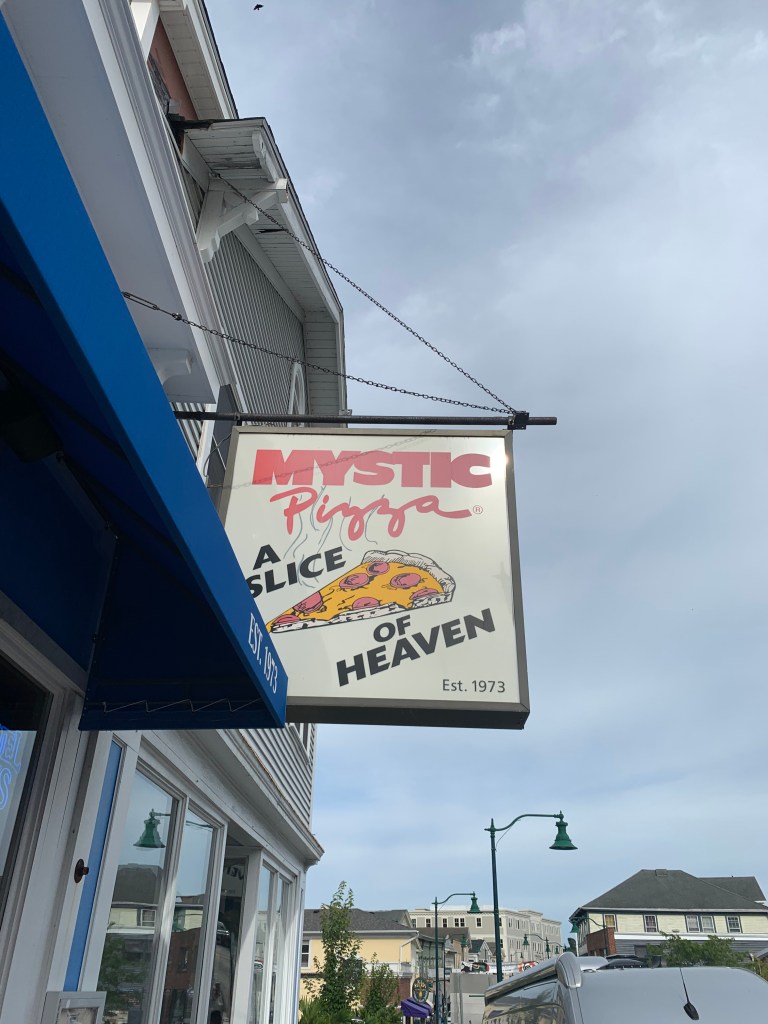


Skyler and I first arrived at Mystic one Friday afternoon after driving just 50 minutes from Providence. The coastal town, known for its history as a significant Connecticut Seaport beginning in the 1600s, immediately struck me as humble and embracing.
The Mystic Pizza restaurant still exists, serving up a hot piece and pint to tourists and locals alike, and was our first stop in the town.

We strolled the Mystic’s historic downtown and waterfront district, nestled amongst colonial-era sea captain’s homes, church steeples, and historic landmarks like the Mystic Drawbridge, all within walking distance, enchanting us with an upscale coastal ambiance. It turns out that the area hosts a variety of dining and drinking options as well as 80 independently owned shops and galleries, plenty of shopping and eating options to keep visitors entertained.
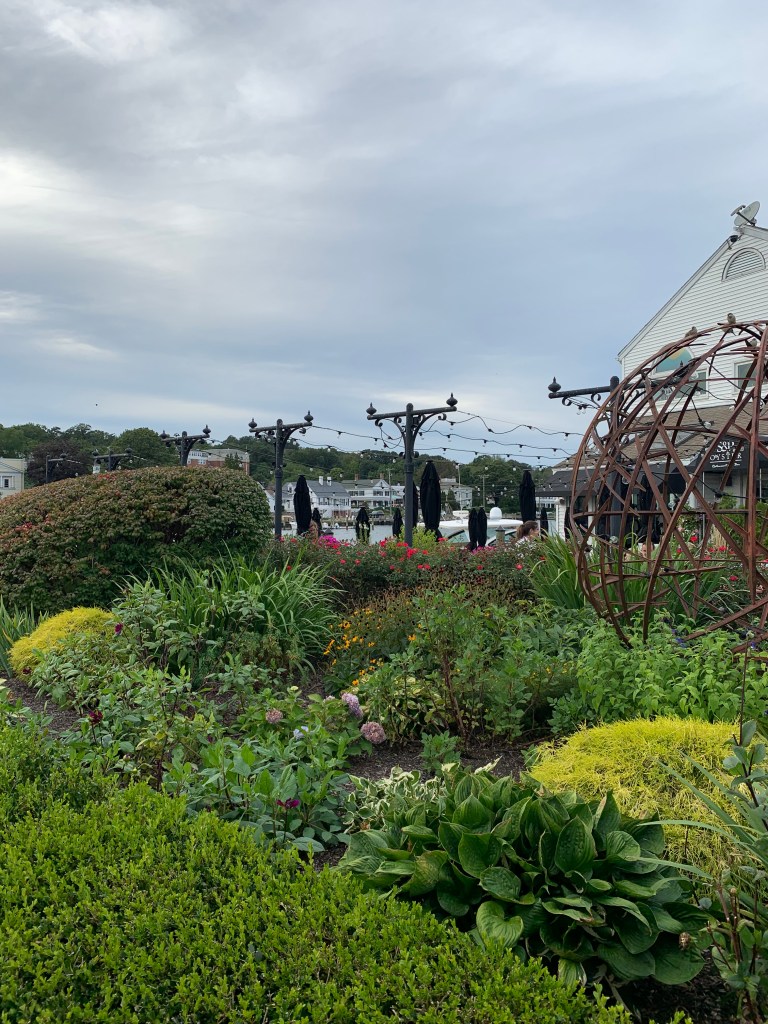
During our stroll of old downtown, The Bascule Bridge was raised on schedule at 40 minutes past the hour, as it does daily: a tradition born of this former seaport that birthed 600+ boats over 135 years. Though these hundreds of boats can no longer be seen from the downtown port, gazing over the harbor is still a sight to behold. What a life it would be to spend an afternoon lounging on an outdoor harbor-facing deck, sipping wine and listening to the soft lapping of the water in the harbor.

Though I still have not seen the movie, after visiting Mystic, I’ve pondered why in the world Julia Roberts and her posse wanted so badly to leave this place. If I were a Mystic local, I might never leave.
The Nuance of Historic Newport, Rhode Island
In an effort to increase my knowledge of the luxury travel space, I am an avid reader of Conde Nast Traveler, a luxury travel and lifestyle magazine. To my delight, the April Issue of Conde Nast Traveler delivered a story about Newport, Rhode Island, describing the city as “arguably America’s most enduring playground for extreme wealth,” essentially a sporting arena for the extremely wealthy to “show off their privileged place in it.”
Newport’s reputation as a summer paradise for the filthy rich was born after its British occupation ended in the 1800s. Though the Industrial Revolution bypassed the former port city, Newport redefined itself as a summer resort destination. Eventually, the wealthiest American families, like The Vanderbilts, the Astors, and the Morgans, attracted to the city’s cultural hub, built ever larger “summer cottages” on Newport’s coast. “Summer cottages,” of course, is a humblebrag, slang for opulent, private mansions used by the millionaires of the age, often only for a few months a year during the summer. These mansions were the locations of extravagant dinner parties, sports, and events for socialites to outcompete one another.
Luckily for Skyler and me, Newport was just a 50-minute drive (it’s delightful how close many of these locations are in New England), and we decided to head straight for Newport’s most well-known summer cottage: The Breakers.
Our Saturday morning drive into Newport afforded extravagant views of the coast, with sailboats lining the harbor, giving us an aerial view of the scenery. We wound our way through the historic downtown while blasting fitting Lana Del Rey tunes and soon found ourselves straining our neck to see the towering mansions that peaked over the 15+ foot topiary hedges that lined the quiet road of Newport’s Mansion District.
We pulled up to a parking lot also surrounded by these massive hedges, and as we walked in the gravel pathway to the ticket office, the glimpse of a massive structure caught our eye. The Breakers is a Gilded Age Mansion finished in 1895 as a summer residence for Cornelius Vanderbilt II, a member of the wealthy Vanderbilt family. The mansion covers nearly an acre of the 13-acre property and has 70 rooms, including 48 bedrooms for family and staff. In addition to 27 fireplaces, it was equipped with electricity – still a novelty in houses during the Gilded Age – as well as gas for lighting.
Responsible for Newport Mansions care, maintenance, and tourism, the Newport Preservation Society manages ticket sales and memberships to the Newport Mansions. One adult ticket to The Breakers will cost you $29, while a ticket to tour two of the mansions will run you $38. Knowing we would like to tour several of the mansions, Skyler and I decided to split the cost of an annual membership, costing just $115. An annual membership gives standard access to all 11 of the Newport mansions for free, plus free access for an accompanying guest. After some quick math, we calculated paying to visit four of the mansions separately over the weekend would end up costing more than simply buying one annual membership, so we sprung for it!
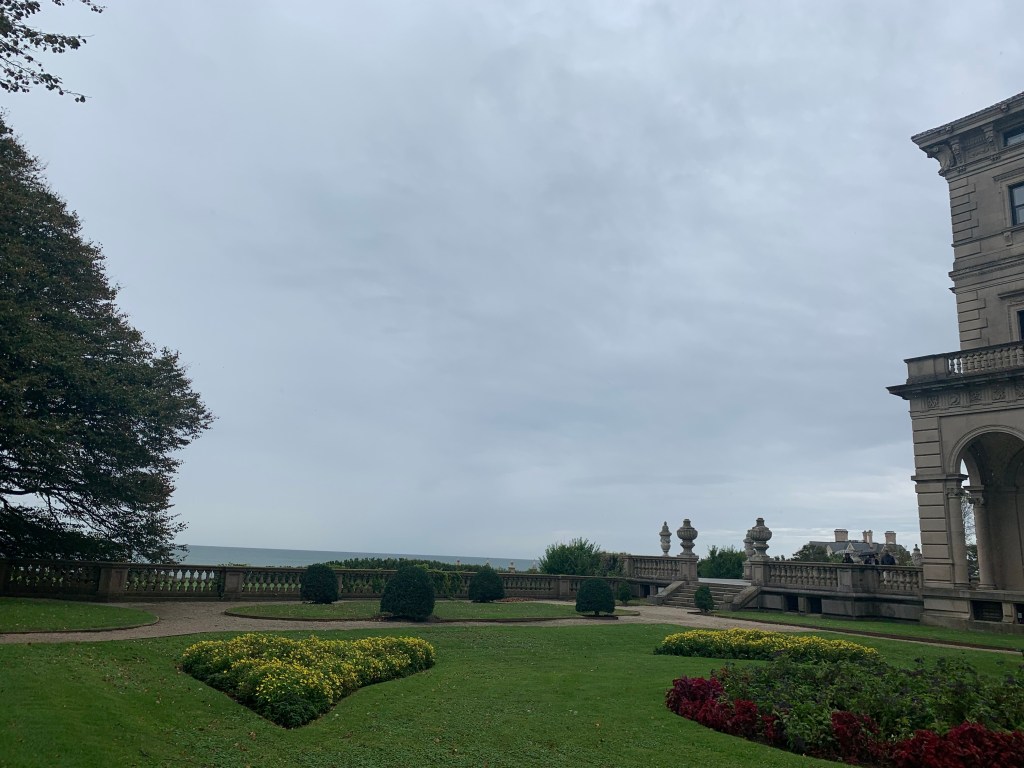
It was an overcast, drizzly morning, but the weather did not deter us from wandering around the outside of the property and grounds in awe. We downed our coffees as we strolled the grounds of the Breakers, as no outside drinks were allowed inside the historic property. As we walked around the side and back of the Breakers, we were greeted by a gray, expansive view of ocean, coastline, and distant clouds with the looming residence ever-present.
Just walking around the towering structure puts the significance and wealth of the property in perspective. The exterior Indiana Limestone is a looming visual, evidence of the effort to make the house fireproof. As we walked to a side garden, gazing out at the coast and then back to the enormous building, I couldn’t help but imagine myself riding a horse through the grounds, as I am certain that one of the wealthy residents did the same thing at one point.

We walked through the low-ceiling front entrance of the house and my gaze shot upward as we made it to the open-air center of the house. The breathtaking central Great Hall, with its 50-foot-high ceiling, was inspired by the open-air courtyards of Italy but exudes the grandeur of the Gilded Age. We picked up a written tour guide of The Breakers, with tour instructions that pointed out the details and the history of each room in the house.

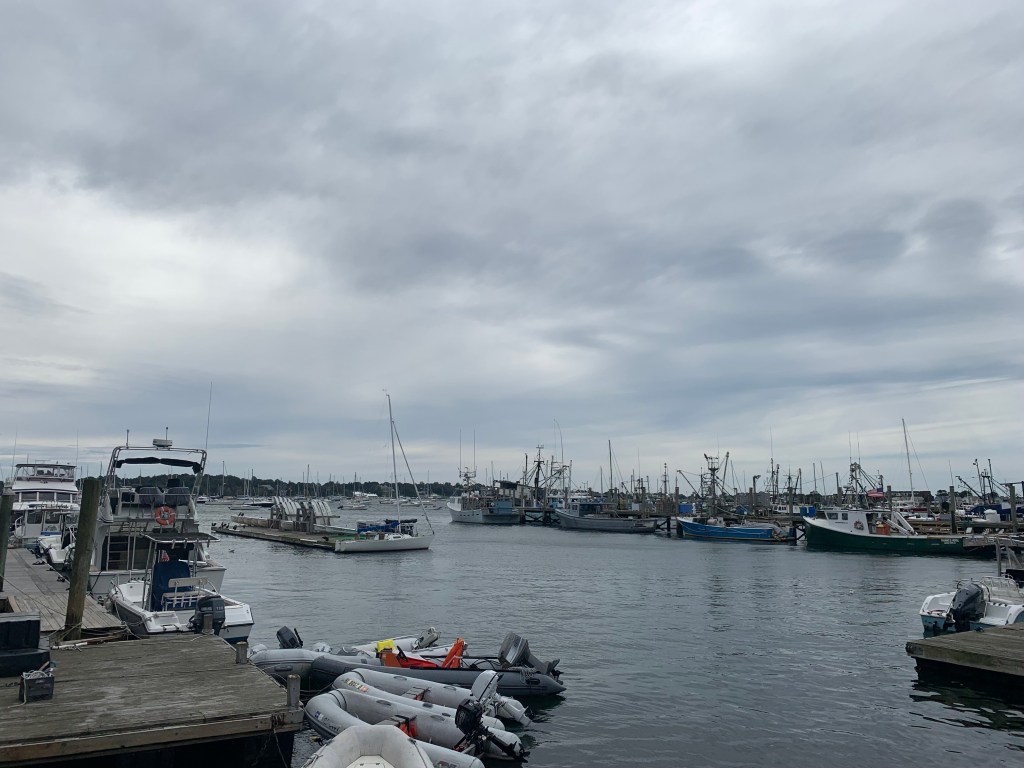
At the end of the extensive tour, we needed lunch to refuel. We decided to go for a lobster roll at the Newport Lobster Shack, a mellow dockside joint serving lobster dinners, rolls & bisque on outdoor picnic tables.
On my to-do list during this trip to New England was to try a lobster roll, which I was told is a beautiful, soft, warm, buttery bun stuffed with cold, lump crab meat, celery, and sauce. My 3 oz lobster roll didn’t disappoint in flavor, and was a great pick-me-up despite its hefty $25 price tag. I washed it down with a coke and fresh, fried calamari while we gazed over the harbor, watching a nearby seagull beg unsuccessfully for a morsel.
Keeping our hard-to-get paid parking spot near downtown, we walked to the historic Thames Street, The very nerve center of the City by the Sea’s bustling downtown area. Thames Street is lined on either side with a myriad of shops, restaurants, and bars, making it a worthwhile place for exploring. We found the area bustling with tourists, locals, and visitors attending the annual Newport International Boat Show.
In the sunny but brisk afternoon, I soaked in the unique fashion of the area. Helly Hanson jackets, tailored pants, and Gucci tennis shoes adorned passerbyers. Traveling frequently, internationally and domestically, taught me that every place has its own distinct fashion. In a way, clothes are an insight to the culture and values of a place. The insight from Newport’s fashion scene told me that the city is effortlessly opulent and elegant, an indication of the city’s timeless wealth.
After some light shopping, it was nearly time for the next activity on the day’s agenda, something that would be a surprise to Skyler, who let me decide the day’s events. While researching the area, I discovered that Newport is home to America’s oldest Polo Club. And it just so happened that same afternoon, the United States Polo Team was playing the South African team at their stadium in Newport.
We arrived at a grassy, open field and purchased our $20 lawn tickets. To my delight, we found Newport’s socialites tailgating the event, friends and families alike picnicking and enjoying wine on picnic blankets and chairs on the lawn. We secured a front-row spot on one end of the pitch and watched the elegant equestrians warming up, turning up clumps of grass from the perfectly manicured field.
The more I watched the match, the less I knew the rules, but from what I gathered, four players on each team worked together to pass a ball to the opposing team’s goalposts to score. It was fascinating to watch the athletes stride, thundering around to locate and move the small polo ball, something I guessed was much tougher than it looked. Despite a close loss to South Africa, the joy of Newport’s historic charm and classic culture overwhelmed me for the better.
Instead of getting a sporadic hotel room that evening (a nearby Motel 6 was $260/night), we decided to drive up to Newport again early Sunday morning. With our unlimited membership access, we decided to tour more of Newport’s Historic Mansions.
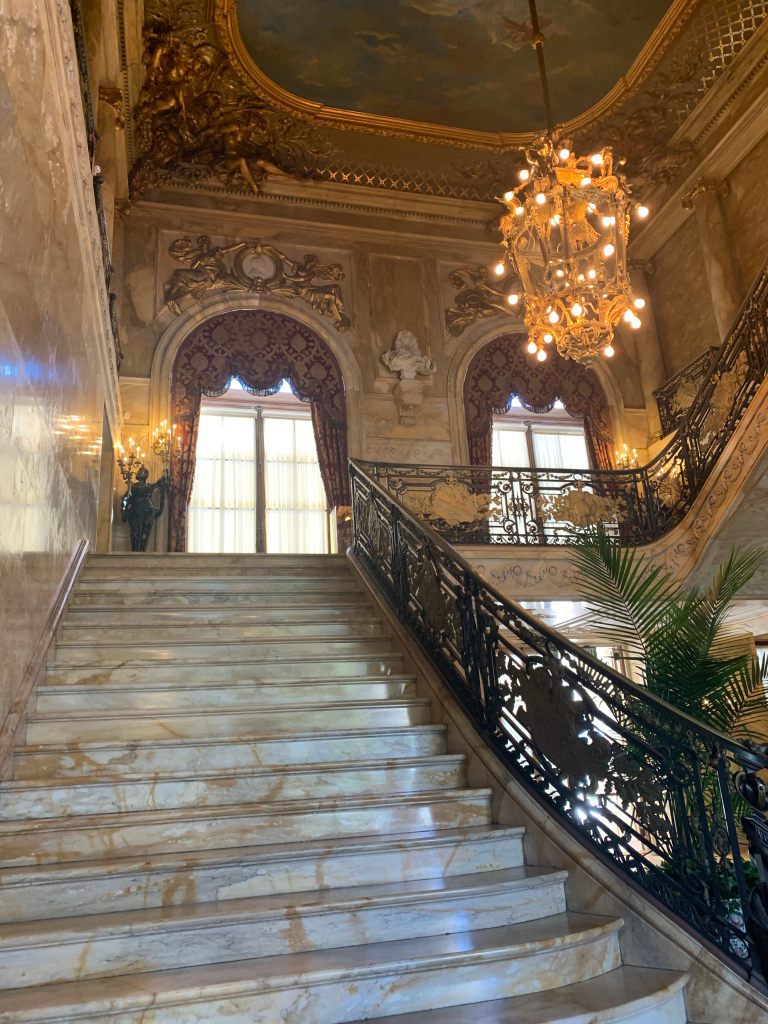
We started at The Marble House, the residence that set the standard for Newport’s transformation to the legendary opulent Gilded Age mansions. Finished in 1892 by businessman William Vanderbilt as a 39th birthday present for his wife Alva Vanderbilt, the 50-room summer cottage is an ocean-side mansion occupying four acres. For our tour of The Marble House, costing a mere $1.75 million during its construction and named for its 500,000 cubic feet of marble, we downloaded the Newport Historic Mansions App, a free service offering an audio guide tour of each mansion. The audio guide directed us throughout the house, offering historical insights, even sampling sounds of classical music and clinking glasses to help us imagine what life would’ve been like in these “summer cottages.”

If you’re looking to tour the Newport Historic Mansions anytime soon, I’d highly recommend downloading the app ahead of time and bringing headphones to listen or split with anyone you travel with. We concluded our visit by strolling the grounds of the house. If we had planned accordingly, we could have enjoyed an afternoon tea at the Chinese Tea Room, on the back side of the property, a structure serving self-serve sandwiches and snacks, as well as afternoon tea overlooking the coast.
We also visited The Elms, a summer cottage modeled after an 18th-century French chateau featuring the latest technology of the Gilded Age. The Elms houses an outstanding collection of paintings, statuary and tapestries, and its landscape features formal gardens, terraces, pavilions and fountains.

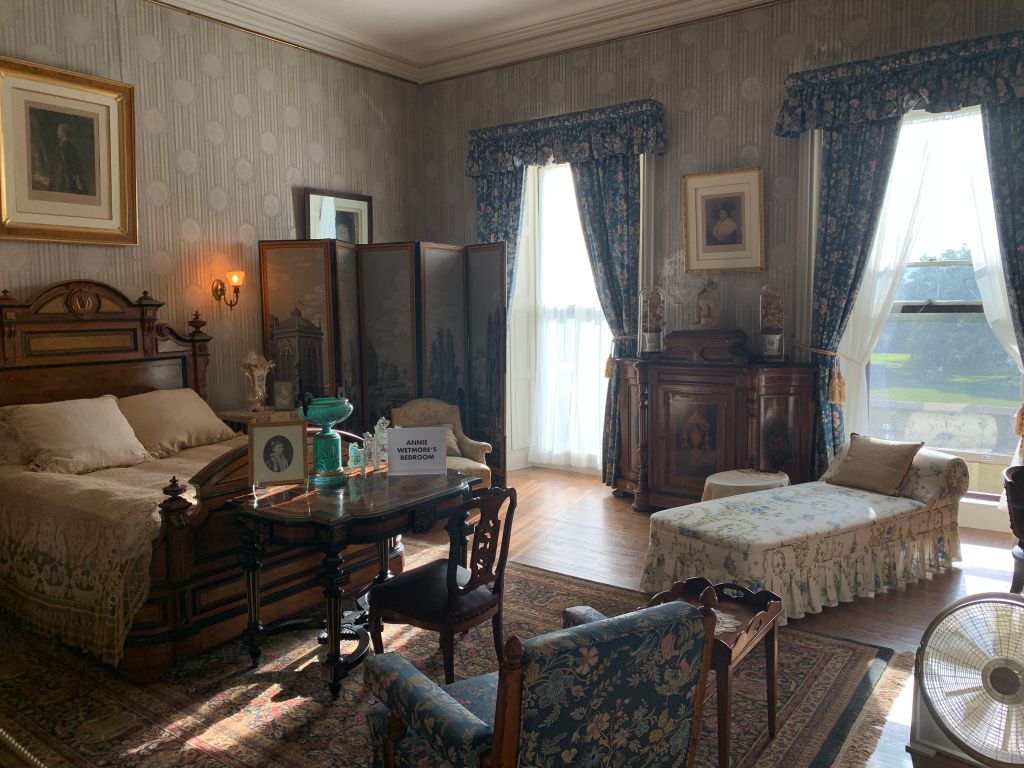
After Jamaican lunch at Humming Bird on Broadway Street, we visited Newport Mansion Chateau-sur-Mer, the epitome of High Victorian architecture, furniture, wallpapers, ceramics, and stenciling. It was the most palatial residence in Newport until the appearance of the Gilded Age Vanderbilt houses in the 1890s.
As we strolled the property grounds, we stumbled across a makeshift parking area of vintage convertibles and luxury cars, which led us to see a troupe of white-linen-clad retirees playing croquet in the field. We sat on a bench that lined the grassy area and watched. Much like Polo, the more I watched these retirees, the more confused I felt about the rules of the game.
In between their shouts over the rules and whose turn it was to hit, I thought about what it would be like to live in Newport and play croquet on a sunny afternoon on the grounds of a historic mansion. I imagined life in Newport as being carefree and indulgent in happy things like fresh seafood, coastal sunshine, and historic ambiance.
In my experience, Newport’s sleepy and historic coastal vibes are warm enough to draw visitors in, and genuine enough for locals to stay. I’m thrilled for the next opportunity I have to visit Newport and like Lana Del Rey’s song, Newport makes me feel like I can cruise down the coast and die happy tonight.

 Traveling With Lola
Leave a reply to kodiakfarm Cancel reply